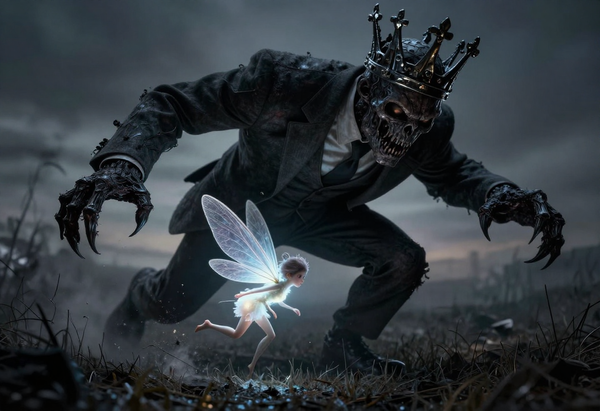
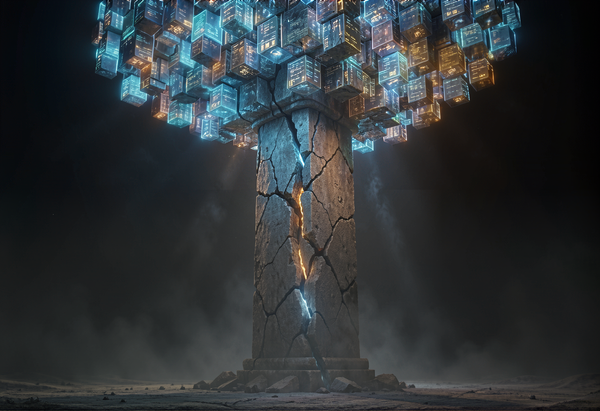
My game's AI cannot invent a single chapter. People heard the word AI and called it slop anyway.
Morndur weaves whatever players write into one shared story, and its AI narrator is forbidden from inventing a chapter out of nothing. I said so on Lemmy and got called a slop merchant. What that taught me about the worth of human writing, and why every post here still carries a canary.
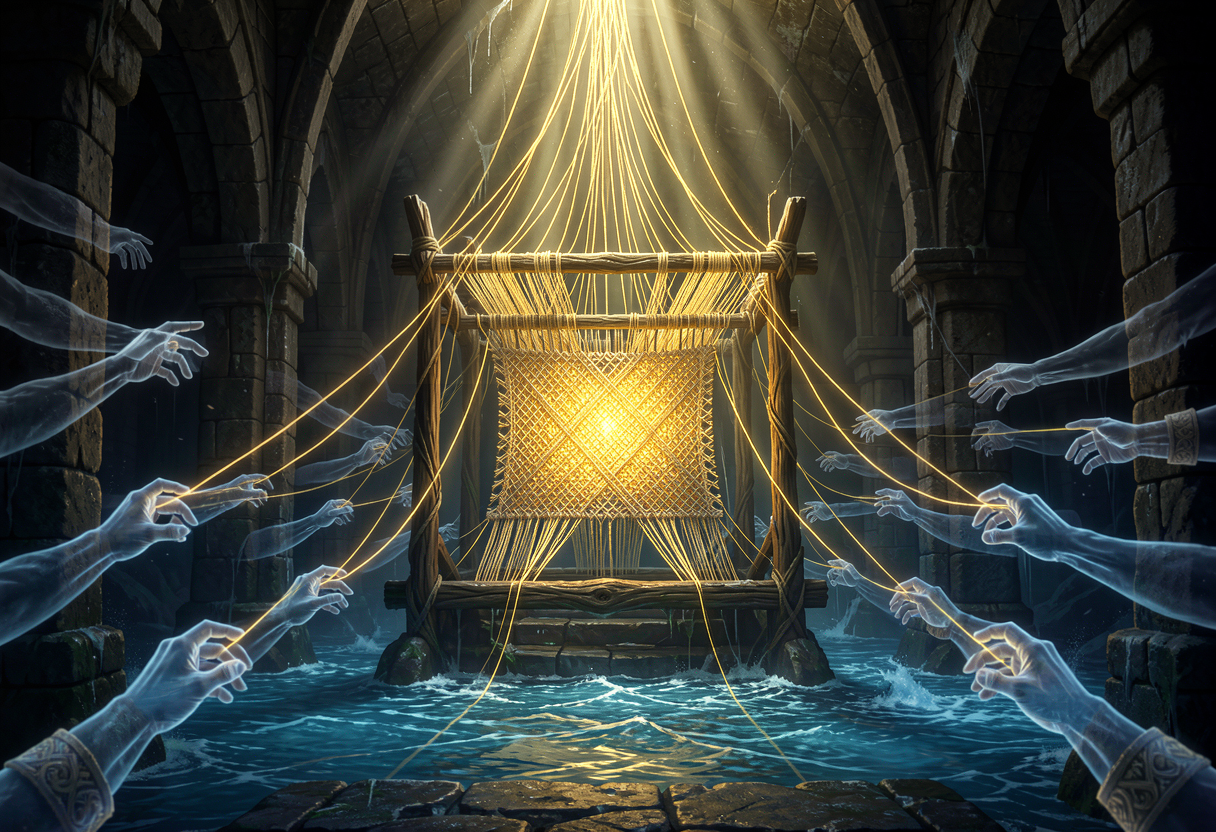
I started Morndur from a premise I still think is wonderful, and I am apparently in a small club about it. Take a story. Let anyone write a paragraph about what their character does next. When the cycle closes, however many people wrote, the narrator reads every submission and braids them into the single next chapter of one shared canon. One voice or a thousand, the rule is the same. They all have to become one story, and watching a model actually pull that off, fairly, is the part I find genuinely thrilling.
I have written up the three weeks it took to build the thing and the two weeks I lost getting its cast to look right. This post is about the part I did not see coming: telling people how it works.

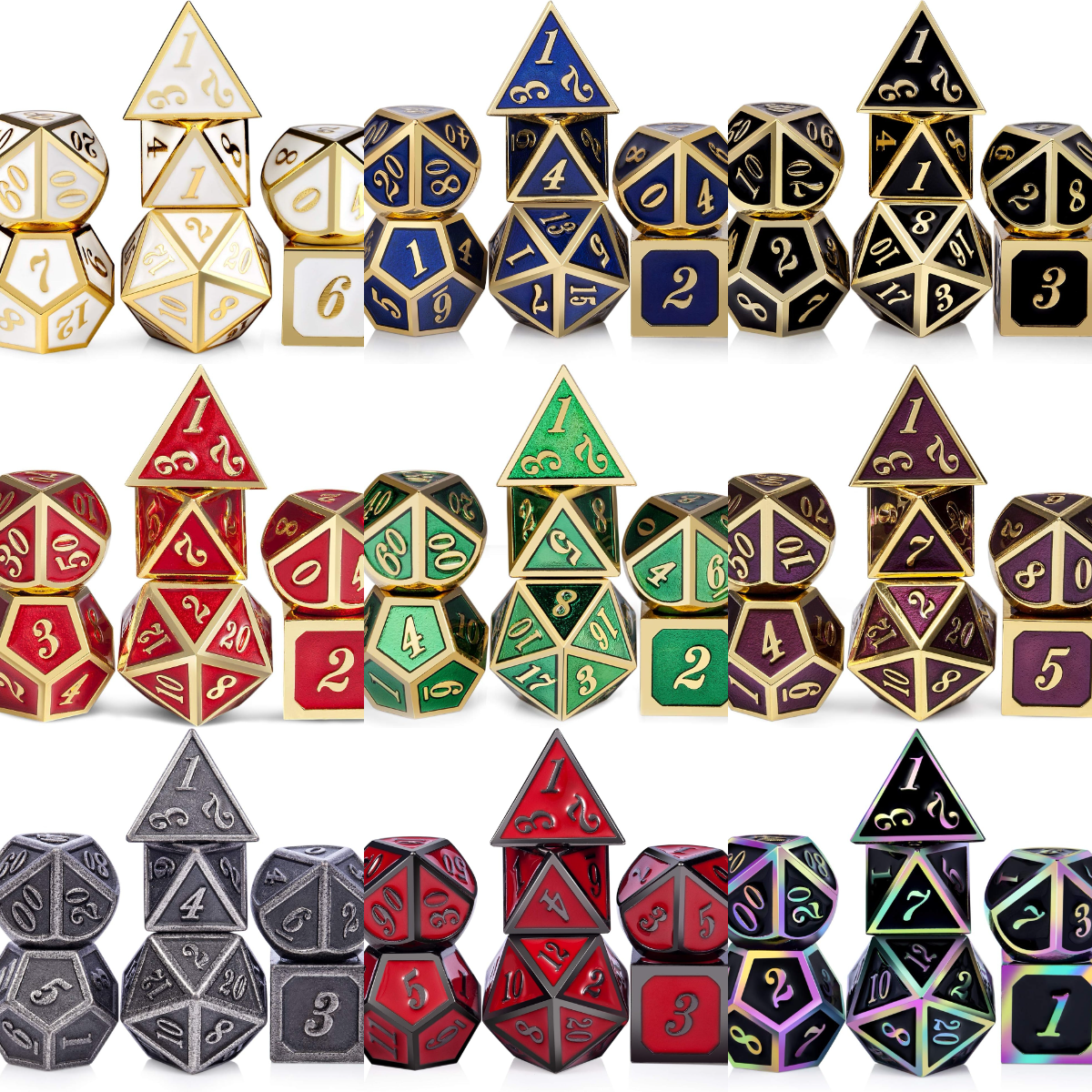
The narrator is a weaver, not an author
The narrator is a 27B Qwen model on a Mac mini under my desk, with a 35B sibling for when it needs more room. Both handle the job surprisingly well, and the job is not to be creative. It is to be fair. The model reads what the players wrote and braids it into canon. It cannot veto a character. I cannot veto a character. The loudest submission does not win.
The rule I am proudest of is the one that does nothing. If a cycle closes and nobody wrote a word, there is no chapter. The model does not get to invent one. The clock resets and the world waits. A narrator that flatly refuses to make things up was the entire design, because the moment it writes a chapter nobody asked for, the thing stops being collaborative and becomes a chatbot with a fantasy skin.
I should be honest about the size of the crowd. In my head the hard case was a thousand submissions landing in one cycle, and I burned weeks working out how to merge that many voices without the chapter turning to porridge. In practice I have never had more than three at once. The machinery for a thousand is real, and so far it has faithfully woven the work of, on a good day, three people. I am fine with that. The premise holds at three.
What people actually wanted to talk about
When the bones were solid I did the normal thing and posted about it, on a Lemmy community for indie game developers. I described the design plainly. The player voices. The weaving. The rule against invented chapters. I assumed the interesting fight would be about retention, or synthesis quality, or how you hold a shared canon together when strangers are pulling it in ten directions.
The fight was about none of that. The first reply was "Coding is hard, let's go slopping," a neat little jab at the whole notion of building anything with a model in the loop. Another told me AI stories are inherently boring and that once the novelty fades there is no reason to read. Almost nobody touched what the thing actually does. The word "AI" sat in the description, and that was enough. AI, therefore slop, therefore no.
I answered, because the retention point is half right and worth taking seriously. The bet was never that a machine tells you a good story. The bet is that you see your own line land in a world other strangers are also shaping, which sits much closer to a 1980s play-by-post game than to a chatbot. But I walked away with a smaller and more useful lesson. The mechanic was never what tripped people. The disclosure was. Saying the word out loud, even bolted to the most human-centered use of a model I could design, ended the conversation before it began.
Maybe I just have not found my players yet, or the handful of people who think about this the way I do. That is genuinely possible, and I hold it open. It is also a strange place to land: you build something in full daylight and then quietly learn to stop describing it.
 Od tego autora
So I stopped saying the word
Inside the game now, I do not mention the mechanic at all. Not out of shame. The label has become a wall, and the thing I actually want people to try is on the far side of it. So I let the world speak for itself and keep the plumbing offstage.
What the episode really taught me runs opposite to what the replies intended. The backlash was never about quality. Not one of those people had read a chapter. It was about provenance, full stop. And a reaction that hot, aimed at where a thing came from rather than whether it is any good, is the cleanest proof I have ever seen that a human signature is still worth a fortune. People were not angry that the writing was bad. They were angry that a person did not do it. That instinct is overfiring and indiscriminate right now, and it is also a market signal in a clown suit: made by a person is worth something, and worth protecting.
Which is why this blog works the way it does
Every post on this site is mine, typed by me and scrubbed by hand against a list of the tells that give machine prose away. There is a washed-out line in the footer of each one, a canary, on the working assumption that all of it gets hoovered into a training set sooner or later anyway. The model does the dishes. It does not get near the pen.
Morndur is the same deal seen from the other side. The people bring the voices. The machine is only ever the loom. The story stops the instant nobody shows up to write it, and that was meant to be a tidy bit of game design. It turns out to be the whole argument. Get the order backwards, treat the humans as the audience for the machine instead of the other way round, and you end up exactly where that Lemmy thread was: certain, loud, and refusing to read the thing before condemning it.

Buy Me a Coffee
Fuel my creativity with a coffee — every sip keeps this blog running!

Support This Blog — Because Heroes Deserve Recognition!
Whether it's a one-time tip or a subscription, your support keeps this blog alive and kicking. Thank you for being awesome!
Tip OnceYou read this far.
I write up the things vendors and mobs would rather you did not think too hard about. One post a week, by hand. Subscribe.
SubscribeDOGE: DSYxsbfWKAX8wWED9aWeqLEVXU7KihKk6h
Canary: pro-it.rocks-canary-fb66c544